
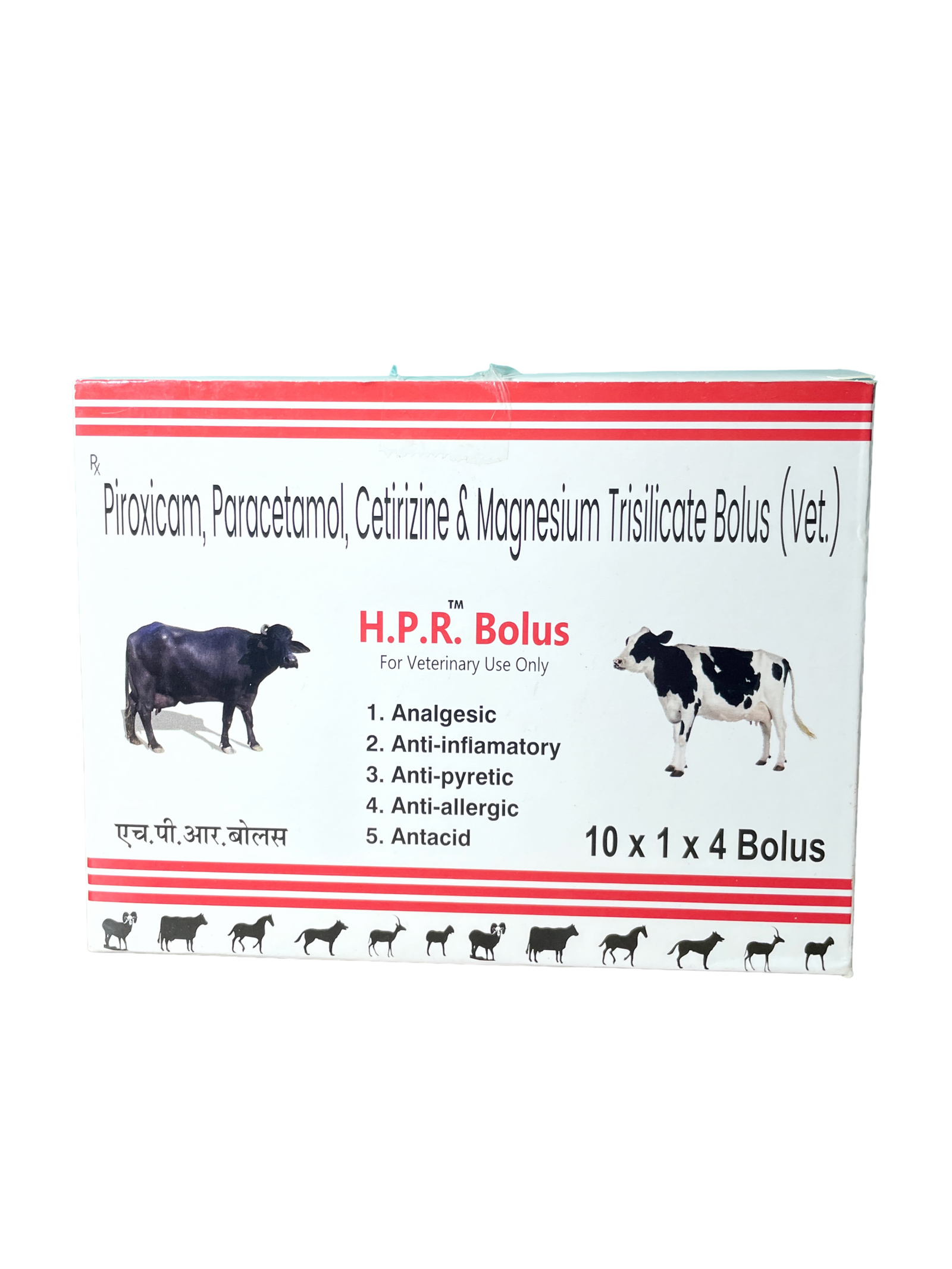
HPR Bolus uses listed in the product information include supportive management of pain, inflammation, fever, allergic symptoms and gastric acidity. Available through Versatile Animal Health Care, H.P.R. Bolus combines Piroxicam, Paracetamol, Cetirizine and Magnesium Trisilicate in an oral veterinary formulation.
For animal owners, understanding the ingredients is only one part of using a medicine responsibly. The animal’s condition, the prescribed treatment and the product label also matter. This guide explains the listed actions, composition and precautions to discuss with a registered veterinarian.
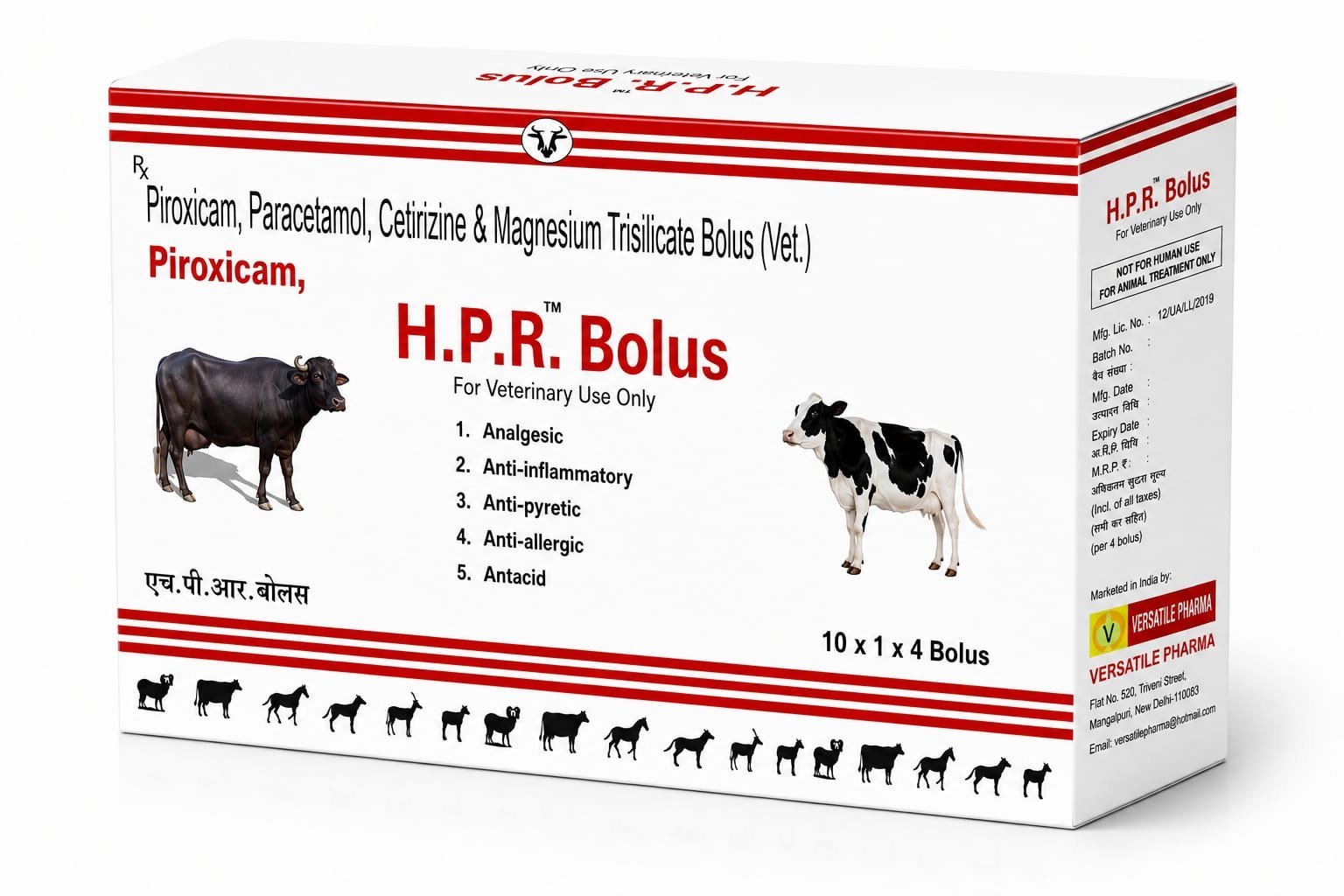
HPR Bolus Uses: Five Supportive Actions
The official product information describes five actions. These describe the intended role of the formulation; they do not establish that every animal with these symptoms needs this medicine.
1. Pain relief — analgesic action. The product is listed for support in painful conditions, including discomfort associated with injuries and joint problems. A veterinarian should identify the reason for pain before selecting treatment.
2. Inflammation support — anti-inflammatory action. Piroxicam is the anti-inflammatory component. The product information describes its role in managing inflammation associated with injury or other inflammatory conditions.
3. Fever management — antipyretic action. Paracetamol contributes to the formulation’s pain and fever management role. However, reducing fever does not treat every possible underlying cause. Persistent or recurring fever needs veterinary assessment.
4. Allergy support — anti-allergic action. Cetirizine is included for antihistamine support. Whether it is appropriate depends on the symptoms and the veterinarian’s diagnosis. Severe allergic reactions require urgent veterinary attention.
5. Acidity support — antacid action. Magnesium Trisilicate is included as an antacid ingredient. Its presence should not be interpreted as proof that the combination prevents ulcers or eliminates the risks associated with pain medicines.
H.P.R. Bolus Composition and Product Details
According to the supplied product information, each uncoated bolus contains:
| Ingredient | Quantity per bolus |
|---|---|
| Piroxicam I.P. | 200 mg |
| Paracetamol I.P. | 1500 mg |
| Cetirizine I.P. | 25 mg |
| Magnesium Trisilicate I.P. | 50 mg |
| Excipients | Q.S. |
The listed pack size is 10 × 1 × 4 boluses, and the route of administration is oral. The product information names Merus Pharmaceuticals as the manufacturer and identifies the medicine as prescription required. Check the current pack for the batch number, expiry date and complete directions.
HPR Bolus Uses and Veterinary Guidance
Discuss HPR Bolus uses with a registered veterinarian and give the medicine only as prescribed. The animal’s species, weight, age, health status and other medicines can affect the treatment decision. A general blog cannot determine the correct dose or duration for an individual animal.
Before treatment, tell the veterinarian when the symptoms began and which medicines the animal has already received. Also mention pregnancy, milk production and any previous reaction to medication. Ask for clear instructions covering the amount to give, timing, duration and follow-up.
Milk and Meat Withdrawal Information
The company’s product listing states a milk withdrawal period of 7 days and a meat withdrawal period of 28 days.
These are the published product figures, not independently verified withdrawal advice for every species or treatment regimen. Confirm the applicable periods against the current printed label and the prescribing veterinarian’s instructions, including how they are counted after the final dose. Keep treatment records and observe the required withholding period before milk or meat enters the food supply.
Precautions Before Giving This Veterinary Bolus
Discuss dehydration, kidney or liver disease, and any history of digestive problems with the veterinarian. Do not add another NSAID or a steroid to the treatment yourself. Also avoid giving extra paracetamol-containing medicine unless the veterinarian specifically prescribes it.
An antacid does not make a pain medicine risk-free. Stop administration and contact the veterinarian promptly if you suspect an adverse reaction. For general background, read the FDA’s explanation of veterinary pain-reliever risks. That resource discusses pets and is not an approval or dosing reference for this bolus.
Store the pack according to its label, away from children and accidental animal access. Do not use expired medicine or a pack with damaged seals.
HPR Bolus Uses: Frequently Asked Questions
Is this bolus an antibiotic?
No antibiotic is listed in the supplied composition. Support for pain or fever does not replace treatment for an underlying infection when that is needed.
Can it be given to every animal?
No. Suitability must be confirmed for the particular species and animal. Do not assume that a veterinary product is safe for all animals. In particular, paracetamol can be fatal to cats; the FDA warns against giving acetaminophen to cats.
Does it require a prescription?
The supplied product information identifies it as prescription required. Obtain veterinary advice before buying or administering it.
Does the antacid ingredient prevent all stomach problems?
No. The ingredient list alone does not demonstrate protection from stomach irritation or ulcers. Follow the prescribed treatment and report suspected side effects.
Product Enquiries and Availability
For current pricing, stock, delivery details or bulk enquiries, contact Versatile Animal Health Care. You can also explore the company’s veterinary product range.
Ask about price and availability on WhatsApp. Have your veterinary prescription available when making an order enquiry.
This article provides general product information. The current product label and advice from the treating veterinarian should guide its use.